The papers also said dogs are chopped up and skinned in the streets of Qianxi township in coastal Zhejiang province during the ancient festival, which is usually held in October. The festival marked a local military victory since 14th century during the Ming dynasty, in which dogs in Qianxi were killed so they would not bark and alert the enemy. After the victory, dog meat was served at a celebratory feast, and since then local people have eaten dog meat at temple fairs held during traditional Chinese holidays.
According to Xinhuanet, the ancient fair was replaced by a modern commodity fair in the 1980s, but dog eating has been kept as a tradition. However, vendors began to butcher dogs in public a few years ago - and get this - to show their dog meat is fresh and safe, as a way to ease buyers' worry that the meat may be refrigerator-preserved or even contaminated. My goodness ! Moreover, the Economist reported it's the belief that dog meat keeps the human's body warm in winter. In addition, dog meat is also good for metabolism and help you sweat in summer, CNN World interviewed a local hostess.
I'm really grateful for thousands of Chinese internet users who have criticized the dog-eating festival on social networking sites, and called for the local Qianxi government to intervene until finally successfully managed to make them listen and take action to put the festival to an end. An internet user named "Junchangzai" on a Chinese micro-blogging website, in a post that was "re-tweeted" 100,000 times, according to Xinhuanet, said "the government's quick response should be encouraged. I hope eating dogs will not be a custom there anymore. It's not a carnival, but a massacre."
Obviously, pressures from public are beginning to count, says the Economist. It reported that last years, a proposed animal-right law drafted by Chinese activists and legal experts would make the “illegal consumption or sale” of dog- or cat-meat by an individual punishable by a fine of up to 5,000 yuan ($730) or imprisonment for up to 15 days. Businesses found guilty of selling the meat risk fines up to 500,000 yuan ($73,500.) But opponents are still many and vociferous both in the press and online, said the Economist. Dog-eating, they argue, is a time-honoured tradition and China is not yet ready for Western-style prissiness about consuming such animals. Perhaps, they suggest hopefully, the word “illegal” could be taken to mean that there might still be a legal way of killing cats and dogs for the table. The Congress admitted two years ago that better laws were needed to prevent cruelty to animals.
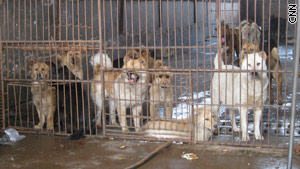
Eating dogs and cats in other places in China are common practise, as we all know. Dog restaurants are nothing new in Beijing. Also for Guangzhou, a southern city, it's still popular. This photo from CNN World shows a pet-farm-look alike scene actually taken place in a meat market: dogs bark and whine behind high chain-link fences, some of them gnawing the wire so hard they bleed at the mouths while cats packed into crowded cages cower in fear if anyone approaches. It's really heartbreaking for a lot of people like us who never just once want to taste the poor animals' meat but rather thinking of them as our loyal and loving pets !
In 2010, at the Han River Dog Meat Restaurant in central Guangzhou, diners could choose from a long list of menu items, including dog soup, dog steak, dog with tofu and more. In the kitchen, the chef chopped up meat for dog hot pot, one of the more popular dishes. Most customers liked it spicy, CNN World reported.
Sadly, China is not the only country where eating of dogs and cats are common, it also happens in Korea, Vietnam, etc. including illegal dog trades and trafficking in other countries. Please help stop the cruelty to men's best friends.
Note: Dog ownership was banned in China during the Cultural Revolution as a bourgeois habit. However, it has become increasingly popular with China's growing middle class and one-child families, according to Reuters.


